
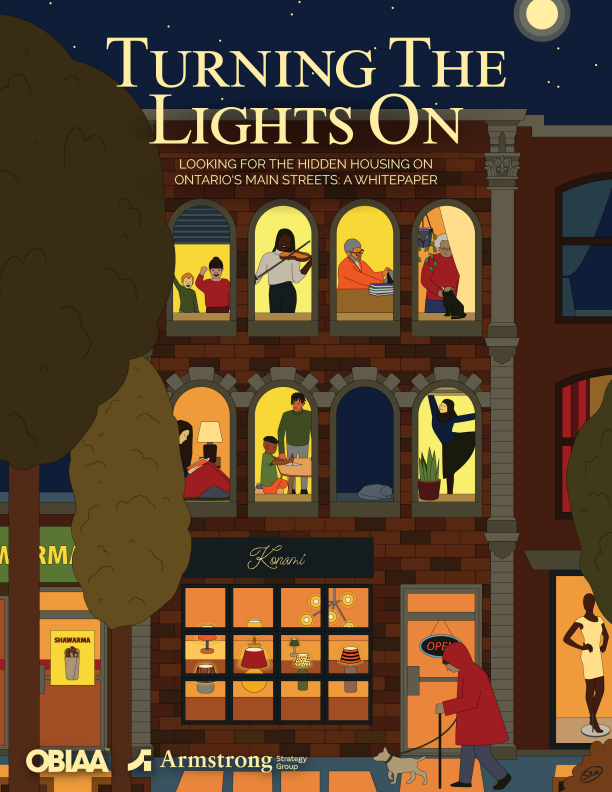
White Paper on Unlocking Main Street Housing
Across Ontario’s Main Streets, there is a hidden opportunity to help address the housing crisis – the vacant upper-floor units sitting above many of our historic storefronts.
OBIAA is pleased to share an advance copy of this upcoming whitepaper “Turning the Lights On.” Developed in collaboration with Armstrong Strategy Group and with contributions from BIA leaders and municipal partners across the province, the report explores the potential of underutilized upper-storey housing and identifies practical policy solutions to help bring these units back online.
Historic Main Street buildings were originally designed with residential uses above commercial spaces, yet many of these units now sit empty due to building code barriers, renovation costs, and landlord concerns. Unlocking this existing housing supply could add thousands of units in communities across Ontario.
Our recommendations include establishing an adaptive compliance pathway within the Building Code, funding a province-wide upper-floor housing inventory, expanding supportive housing partnerships, and strengthening Community Improvement Plans to support conversions.
This work was inspired by the innovation and dedication BIAs bring to strengthening their Main Streets every day. Your experiences, insights, and leadership continue to shape the solutions needed to revitalize downtowns across the province.
Over the coming weeks, OBIAA will be sharing this report more broadly with provincial partners, municipalities, and media to help advance these recommendations.
In the meantime, we welcome your feedback and would be grateful if you shared examples from your own communities that support this conversation.
Together we can help turn the lights back on on Ontario’s Main Streets.
Included in this report:
- The scale of vacant upper-floor housing across Ontario communities
- Policy barriers preventing property owners from activating these units
- Successful examples from municipalities and institutions
- Recommendations for provincial, municipal, and community partners